
The Missing Fix That Finally Reveals Why Reader Attention Fades
Most of us assume that when someone stops reading halfway through an email or a blog post, the fault sits somewhere obvious. It might be the wrong headline, a topic nobody wanted, or an idea that was not strong enough to carry them further. I believed that too, for longer than I would like, right up until I started watching exactly where readers dropped off rather than guessing afterwards.
Here is the part that surprised me. The strongest sentence on the page and the weakest sentence on the page were rarely where reader attention broke. It broke in the space between two good ideas, the small pause where nothing was pulling the reader forward into whatever came next.
You have told me, more than once, that you ‘can’t sell’ or simply don’t want to, and that is exactly why this matters. You do not need a bigger idea to keep somebody reading. You need a better join between the ideas you already have, which is a much smaller thing to fix than it sounds.
Why The Blame Always Lands In The Wrong Place
When one of my weekly emails underperforms, my first instinct is still to blame the subject line, or to decide the topic simply was not interesting enough for the people reading it.
Most of the time that is not where the trouble lives.
Many of you are not writing to sell anything in particular. You are writing to stay in touch with people who may, one day, decide to try what you offer, which means reader attention is not a nice extra. It is the whole relationship, built one email at a time.
The Small Pause That Loses Reader Attention
Nick James, who has been writing sales letters and online content since 2001, has spent years watching exactly this pattern on his own pages. He noticed that a page performing badly almost never had a weak idea hiding inside it. It simply had nothing carrying the reader from one idea into the next, and that gap was where people quietly closed the tab.
I find that oddly reassuring. The fix is not a rewrite. It is a repair.
Before you change a single idea on your next page, it is worth reading it out loud, start to finish. That is the way I now do it with my own newsletter drafts before I send them. Every place your own voice wants to pause without a clear reason is a seam worth looking at twice, and most of us never think to check.
I have found this useful enough that I now mention small writing habits like this one among other articles I have shared recently. They tend to matter far more than they first appear to.
A Simple Bridge Keeps Reader Attention Moving
A bridge is nothing more than a short line that carries a reader from one idea straight into the next, with no bump along the way.
Something like: ‘and that is where it gets interesting’, or ‘here is the piece most readers never see’. Neither phrase teaches anything on its own. Their whole job is momentum, a small promise that something useful is one line away, kept almost immediately.
Reader attention rarely breaks inside an idea. It breaks in the gap between two good ones.
I keep a short list of bridge phrases near my own screen now, and when a page feels flat, I check the seams before I touch a single idea. Nine times out of ten, that is exactly where the trouble was hiding.
Proof Is What Makes The Bridge Hold
A bridge will carry a reader across one small gap. It will not carry them across real doubt, which is the question sitting quietly behind almost every claim you make: says who?
One specific detail answers that question far better than a confident sentence ever will. Compare ‘our newsletter covers five simple income ideas, most people skip the fourth one’ with the alternative. ‘Our newsletter covers five simple income ideas, and here is the one almost everyone skips: the fourth one.’
The information barely changes between those two lines. The seam between them disappears, and reader attention stays exactly where you want it, right through to the end.
I know this from writing my own emails each week. It was long before I ever thought about why some of them worked and others quietly did not. One small, specific detail usually does more work than three confident claims stacked on top of each other.
Watch For One Common Mistake
There is a failure hiding on the other side of this too. Add a bridge phrase after every single sentence and your writing stops feeling like writing at all.
It starts to feel like being nudged, and most readers notice that shift faster than you would expect.
Use a bridge where a real gap exists between two ideas. Leave the rest alone. A repair your reader never notices beats one they can feel happening to them.
Try This Before You Send Your Next Email
Before your next newsletter, blog post or even a simple reply to a customer, read it aloud from the start. Mark every spot where your own voice wants to pause without a reason pulling it forward.
Add one bridge phrase at each spot. Then read it again, and notice how much further it carries you without that small, familiar urge to stop reading halfway through.
You are not rewriting the ideas you already trust. You are simply repairing the seams between them, and that is a far smaller job than it sounds. It holds true whatever stage of building an online income you happen to be at.
Small fixes like this rarely feel dramatic while you are making them. String a few together, though, and your own writing starts doing something it may never have done before. It can hold people all the way to the last line, including the ones you were quietly worried might wander off halfway through.
Kind regards,
Angus
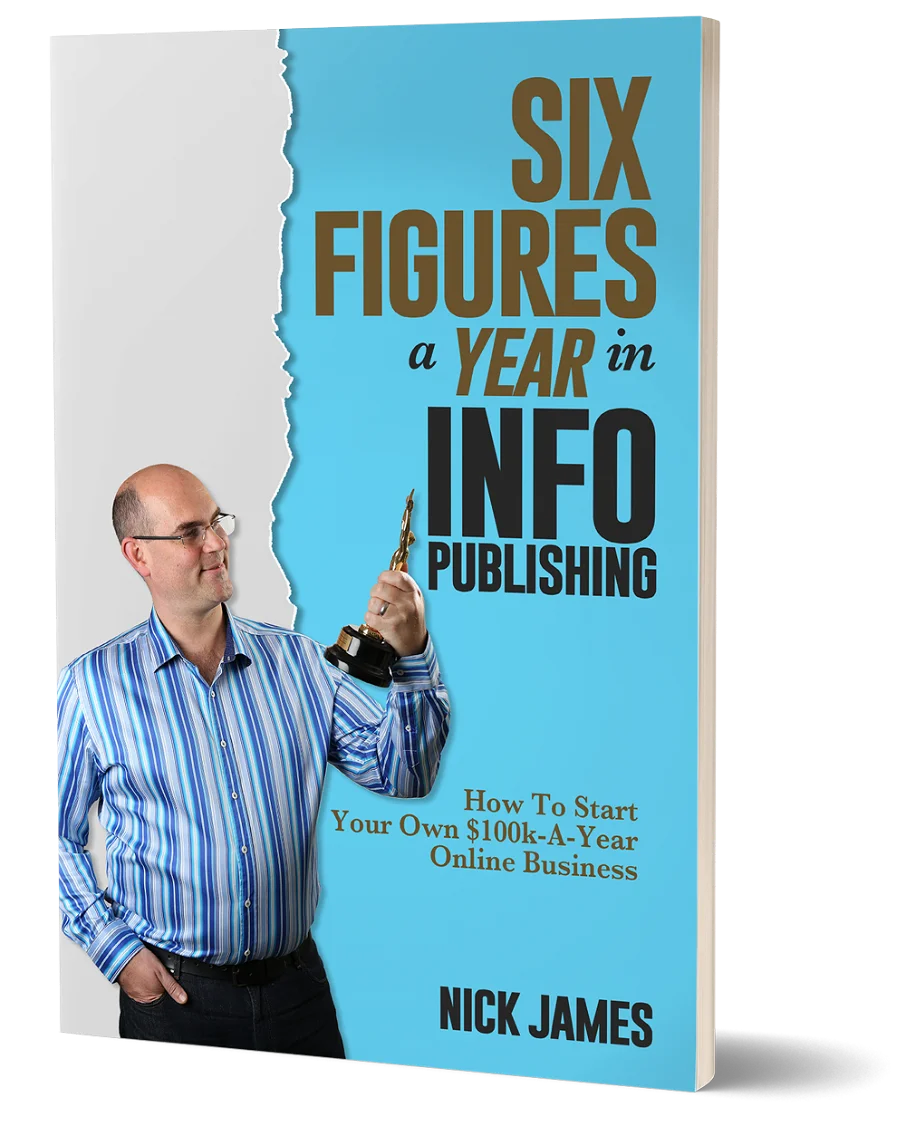
Author offers a FREE copy of this book to his next door neighbor... to prove he's not a drug dealer!
Now claim your FREE COPY.
and follow the step-by-step instructions for making the kind of money (and living the kind of lifestyle) that'll get your neighbors curtains twitching with curiosity!
Enter your details below to discover how to claim your FREE COPY of 'Six Figures A Year In Info Publishing' ...
Privacy Policy : We value your privacy. You can unsubscribe from receiving future emails with 1 click at any time.