
What’s The Surprising Reason Your Call To Action Goes Wrong?
Picture this. You open an email from someone you have followed for months. Before you have even finished the first line, you are told the price goes up at midnight. You were not ready to buy. You were still deciding whether you trusted this person at all. You close the email, and quietly, without ever unsubscribing, you stop opening the next one too.
That is not a weak subject line failing you. That is a call to action aimed at the wrong moment, and it does more damage than a missed sale. Many of us carry a very real fear of being scammed or taken advantage of online. A call to action that pushes too hard, too early, confirms that fear rather than calming it.
Here is what I have come to believe, after years of watching this play out in my own business. It also comes from the communities I have been part of along the way. The businesses that earn trust are not the ones shouting loudest. They are the ones asking the right thing, of the right reader, at the right moment. Get that match right, and selling stops feeling like selling at all.
The Four Stages Hiding Inside Every Reader
Every person who lands on your page, or opens your email, is standing somewhere specific in their own decision. Some have only just noticed a problem exists. Some are actively comparing what you offer against two other tabs open on their screen. Some have already decided, and are one honest nudge away from saying yes.
Treat all three the same way, with the same urgency and the same bold button, and you are not persuading anyone. You are guessing, and most readers can feel the difference.
Someone who has only just spotted the problem needs curiosity, not a countdown clock. Someone comparing their options needs a clear point of difference and a way of lowering the risk of trying you. Someone who has already decided needs one honest reason to act today rather than next month. That last stage is really the only place genuine urgency belongs.
Think of it as three different conversations rather than one broadcast to everyone at once. To someone who has only just noticed the problem, you might simply say, here is a short guide explaining why this keeps happening, with no form to fill in. To someone weighing you against two other options, you might say, here is exactly what makes this different, along with a guarantee that removes the risk of trying it. To someone who has already decided, you might finally say, this door closes Friday, and here is the honest reason why. Three sentences, three very different readers, and only the last one needs a clock attached to it.
Where I Learned This The Hard Way
For several years I was a paying member of a Zoom-based community built around a marketer I had bought from for a long time. The fees kept rising, charged weekly rather than monthly. The group became an inflexible place to be if you ever wanted to leave or push back.
Every message pushed urgency at people who had not finished deciding whether they trusted the community at all.
Looking back, that was the real fault, not the price itself. It taught a lot of us, quietly, to stop reading those messages properly. Eventually I left the paid side of it. I still think carefully about what that experience taught me whenever I write my own call to action today.
The same pattern shows up on a far smaller scale in other articles I have shared recently, and it is worth saying plainly here. A call to action aimed at the wrong stage does not just underperform. It teaches your reader to stop trusting your urgency altogether, and that is a much harder thing to win back.
Matching The Ask To The Moment
None of this means rewriting every page you own this week. It means asking one plain question before you write a single line asking for anything.
Which of the four stages is this particular reader standing in right now?
If the honest answer is the first or second stage, drop any invented deadline completely. Lead with something useful, or a real example of someone who has already solved the problem your reader is only just noticing.
If the answer is the third stage, focus on what makes you different, and on lowering the risk of trying you. A genuine guarantee, or a plain account of what results look like in practice, does more here than a clever phrase ever will.
If the answer is the fourth stage, that is the one place a real deadline or a real reason to act today earns its place. Everywhere else, it only teaches a careful reader to be more careful of you.
A Simple Way To Check Your Own Work
This matters especially for anyone building an online income later in life. It often comes alongside the worry of not being a natural seller, or not wanting to spend all day chasing people for a yes. The good news is that matching your call to action to the reader in front of it has very little to do with being pushy. It has almost everything to do with paying attention.
Take one page or one email you already have live. Ask who is likely reading it, and where they probably stand. Then check whether what you are asking for matches that stage, rather than matching whatever felt bold to write at the time.
Most pages do not need a full rewrite once you do this. They need one honest look at who is standing in front of them. And one small change to what you are asking that person to do next.
Building This Into How You Work
Over the years, the businesses I have admired most have tended to ask for very little from a brand new reader. That includes a few I have learned a good deal from inside my own journey through this industry.
A small piece of useful thinking. A chance to be helpful before being asked for anything in return.
The asking for more comes later, once trust has had a proper chance to build. It tends to land far more gently when it finally arrives.
If you only take one thing from this, let it be the question itself, asked plainly before your next email or page goes out. Not how do I write a stronger call to action, but what does this particular reader need to hear from me right now. It is a small shift, and it changes almost everything that follows it.
Pick one page this week and run that question against it properly. You may be surprised how much quieter, and how much more effective, the right ask turns out to be.
Kind regards,
Angus
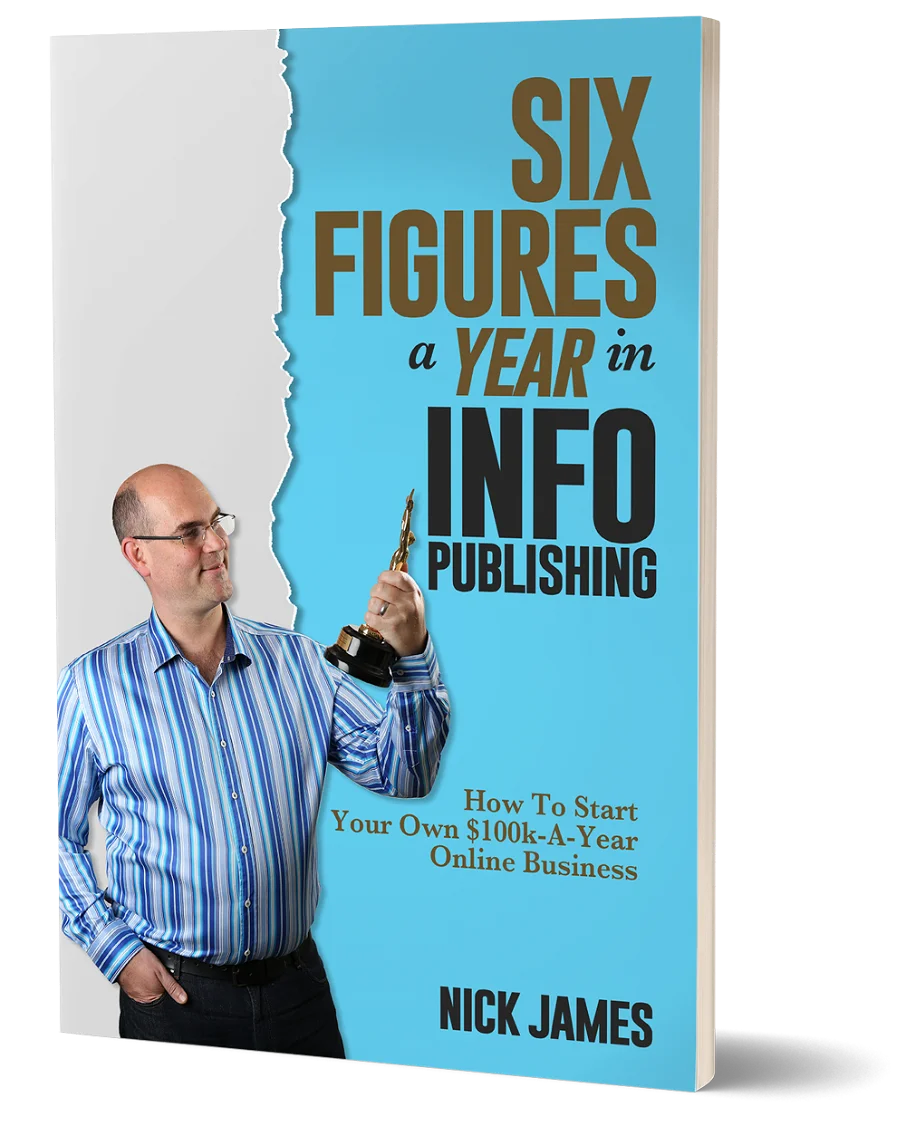
Author offers a FREE copy of this book to his next door neighbor... to prove he's not a drug dealer!
Now claim your FREE COPY.
and follow the step-by-step instructions for making the kind of money (and living the kind of lifestyle) that'll get your neighbors curtains twitching with curiosity!
Enter your details below to discover how to claim your FREE COPY of 'Six Figures A Year In Info Publishing' ...
Privacy Policy : We value your privacy. You can unsubscribe from receiving future emails with 1 click at any time.