
The Secret Reason A Clear Offer Beats Many Skills
“I don’t want to sell” is one of the phrases I hear most often from people weighing up an online income later in life.
It usually comes paired with another one: “I’m not technical.” Between the two, it is easy to believe that building an income online means becoming a different kind of person. Someone comfortable chatting with strangers all day, or decoding software nobody ever properly explained.
Here is the part worth hearing early. Neither skill is required. What moves the needle is a single clear offer, built around one thing you already know how to do, not a growing list of things you are supposed to learn before you start.
Most people approaching this later in life assume the opposite. They collect courses, gather half-finished skills, and quietly believe the missing piece is one more piece of training. It rarely is.
Why More Skills Rarely Means More Sales
A long career in hospitality taught me something that applies here just as well. A menu with forty dishes rarely outsells one with five done properly, because customers do not want more choice.
They want to know exactly what they are getting, and exactly what it will do for them.
A reader scanning an offer for the first time is not impressed by a long list of things you can help with. They are looking for one answer to one problem, stated plainly enough that they do not need to work out whether it applies to them.
At my own cheese stall, the stock that sells fastest is never the enormous board with thirty varieties lined up end to end. It is the small table at the front with three cheeses and a card next to each one, naming exactly what it is and who tends to like it. Customers stop there first, because they can decide in seconds rather than standing undecided in front of a wall of choice.
A scattered list of skills asks them to do that sorting themselves, and most will not bother. They will simply move on to the next page.
The Fixed Offer That Removes The Guesswork
A fixed, clearly described offer does something a long list of skills never can. It tells a reader exactly what happens if they say yes, before they have to ask a single question.
Think of it as naming one result, attaching one timeframe, and keeping the whole thing narrow enough to describe in a single sentence. Not “I can help with your newsletter.” Something closer to “one finished opening email, written for you, within five working days.”
That kind of clarity removes the part of selling most people my age dread most. The back and forth, the negotiating, the feeling of having to talk someone into a decision. A clear offer convinces on its own, simply by being specific.
I have written more on building this kind of simplicity into a small business in other articles I have shared recently. It is a theme worth returning to often, because it solves more problems than it first appears to.
What A Simple Offer Actually Looks Like
Take whatever you already know, whether that is forty years in a trade, a career spent organising other people, or simply years of running a household well. Then ask one question. What is the single result people keep asking you for help with?
That question usually produces something narrower than expected, and narrower is exactly what you want. A broad promise to “help with marketing” is far weaker than a narrow promise to tidy one newsletter, rewrite one product page, or sort one set of photographs properly.
Picture two people offering help with a newsletter. One says, “I can help with your email marketing.” The other says, “I will write one finished welcome email for your list, ready to send, within five working days, for one fixed fee.” The second person gets replies, because there is nothing left to work out. The first gets silence, because the reader does not know what they are actually being offered, or when it will arrive.
Give that narrow result a plain name, a fixed turnaround, and a simple description of what is included. You now have something a stranger can say yes to without needing a conversation first.
The same principle holds however modest the result sounds. A promise to proofread one page, update one spreadsheet, or set up one simple booking calendar can be just as fixed and just as clear as anything grander, and a clear small promise will always outsell a vague big one.
This matters just as much if your audience is, like mine, people worried about outliving their savings or being left behind by technology. A clear offer does not ask them to trust a stranger with something vague. It asks them to trust one specific, well-described promise.
Pricing It So The Decision Is Easy
A fixed price does more work than people realise. It tells a reader the decision in front of them is small, not open-ended.
An hourly rate invites worry. Nobody knows how many hours something will take, and that uncertainty is often the real reason a reader hesitates, not the subject itself.
Picture two quotes for the same small job. One is “somewhere between two and three hours of my time.” The other is one flat figure for one finished result. The second is the only one a busy reader can say yes to without needing to think it over.
A single, fixed price attached to a single, fixed result removes that worry completely. The reader knows exactly what they are agreeing to, and so do you.
Starting With The Smallest Version
You do not need to build your entire business around one offer on day one. Start with the smallest version of it, aimed at the person most likely to need it quickly.
Say your narrow offer is tidying one newsletter. The smallest version might simply be rewriting a single subject line and opening paragraph for a handful of people you already know, at no charge or for a token fee, purely to see what questions come back and how long the work actually takes you.
Deliver it a handful of times. Notice what takes longer than expected, which questions keep repeating, and what the person values most once the work is finished.
Only then widen it, adjust the price, or add a second offer alongside it. The order matters more than most people realise. Build the proof first, then build the range.
A residual income rarely starts as something complicated. It usually starts as one small, well-described promise, kept consistently, to one person at a time.
None of this requires selling in the way most people fear, and none of it requires becoming technical overnight. It simply asks you to say one thing clearly, to one person, and let that clarity do the convincing for you.
Kind regards, Angus
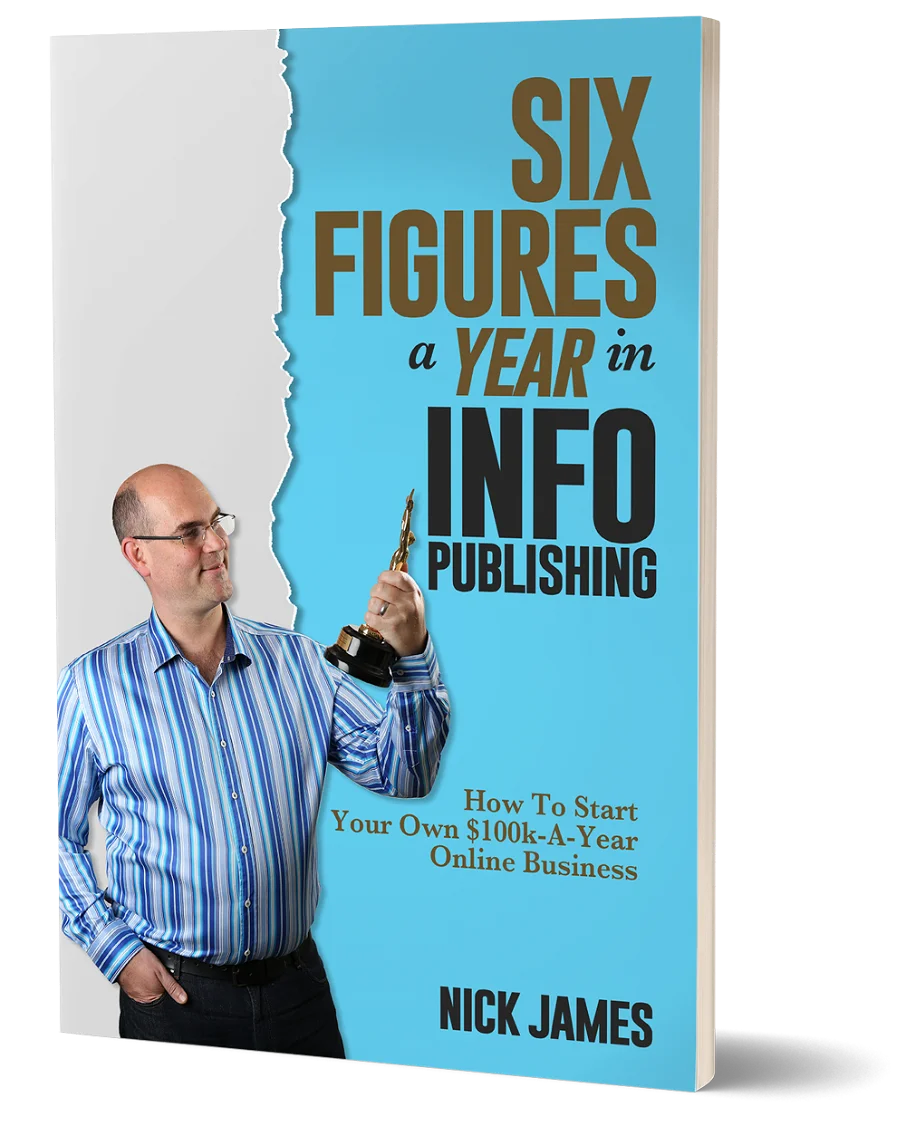
Author offers a FREE copy of this book to his next door neighbor... to prove he's not a drug dealer!
Now claim your FREE COPY.
and follow the step-by-step instructions for making the kind of money (and living the kind of lifestyle) that'll get your neighbors curtains twitching with curiosity!
Enter your details below to discover how to claim your FREE COPY of 'Six Figures A Year In Info Publishing' ...
Privacy Policy : We value your privacy. You can unsubscribe from receiving future emails with 1 click at any time.