

The Surprising Reason A Real Number Beats Any Big Promise
Every Saturday morning for years, I have set up a cheese stall at our local Farmers Market. I could tell you almost to the pound what a good week looks like before I have even unpacked the van.
Nothing dressed up, nothing exaggerated, just a number I know is true because I counted it myself. I was standing behind the same trestle table I have stood behind for years now.
That is social proof in its plainest form. It is exactly what is missing from most of the sign-up pages built by people trying to reach an audience like ours. Many of you have told me you are afraid of getting scammed or taken advantage of online. That fear is not unreasonable, given how much of the internet is built on claims nobody can check.
The good news is that the fix for that fear is not cleverness. It is honesty, stated plainly, with a real number attached to it. That real number is a simple form of social proof, and it works whether your list has forty people on it or forty thousand.
Why Your Reader’s Brain Trusts A Crowd Before It Trusts A Sentence
A stranger who lands on your page has never met you, so their brain reaches for the fastest shortcut available to it. If other people have already said yes, this is probably safe for me too, it decides, often before you have finished your second sentence.
That shortcut is not a flaw in your reader.
It is simply how a careful mind protects itself from a mistake it cannot afford to make twice. This is especially true later in life, when trust in anything online has usually been earned the hard way rather than given freely.
Back at the cheese stall, I watch the same shortcut play out every single week. You will recognise it the moment you see it happen online too. A new customer rarely tries the cheddar because of anything I say about it. They try it because they watched the person in front of them ask for a second wedge. Something about that small, ordinary moment settles the decision for them.
Whatever you are building online, whether that is a small email list or your first course for people your own age, the same rule applies. Your reader trusts the queue in front of them far more than they trust your headline. Building that queue in public is the whole job ahead of you.
The Difference Between A Vague Claim And A Real Number
A vague line like helping people build a better retirement fades the moment somebody reads it. It could belong to any business alive, and readers know it without being told.
A specific line sticks. Three hundred and twelve subscribers opened last Tuesday’s email. That number cannot belong to anybody else’s list but yours, and it works so much harder than a slogan ever could.
Specific always outsells vague, on a subject line and on a subscriber count alike.
This is the shift that lets a small newsletter compete with a much bigger one, on equal footing. A modest list of two hundred people, each one real and each one counted truthfully, will always out-trust a claim of thousands nobody can verify.
It also explains something I have noticed on my own stall over the years. A regular customer who has bought from me for three winters running is worth more to my little business than a passing crowd who never comes back. The same is true of a small, loyal group of subscribers.
A Few Honest Ways To Show The Small Crowd You Already Have
You do not need thousands of readers to put this social proof to work. You need only be willing to show the number you already have, however modest it currently looks on paper.
State your real number. Even a small one works far harder than an adjective ever will. Something like join four hundred readers who get this every Friday tells a stranger more than join our growing community ever manages to.
Share one genuine reply. A short line from an actual subscriber, in their own words, carries more weight than a paragraph you wrote yourself to describe how helpful you are.
Name a real milestone. A date you started, or a number of people you have helped so far, even a modest one, still counts as proof that you stuck around when plenty of others did not.
None of this needs to be dressed up or polished into something it is not. It only needs to be true, and stated plainly enough that your reader could check it for themselves if they ever wanted to.
Where This Belongs On Your Page
Put one honest number near the button itself, in the same glance as the invitation to join. Don’t bury it at the bottom of the page, where almost nobody scrolls. I have written a little more about small, honest changes like this. You’ll find it in some of the other articles I have shared recently, and the same pattern keeps turning up.
Your welcome message is a second chance to do exactly the same thing. Tell a brand new subscriber how many people are already reading alongside them. A lonely inbox suddenly feels a little more like a room they have just walked into.
The One Rule That Protects All Of It
None of this works if the number is not real. An inflated figure, once spotted, does considerably more damage than showing no proof at all.
A reader who catches one invented number quietly assumes everything else on your page was invented too.
If your list is small today, say the true number and let it grow in public. A small, honest figure this month becomes a bigger, honest one next year. That’s much the way the queue at my stall grew, one Saturday at a time rather than all at once.
Start With The One Number You Have Today
You do not need to overhaul your whole sign-up page this week. Pick the one page, or the one welcome email, that matters most to your business right now.
Add exactly one honest number to it. Not five numbers scattered across the page. One.
Watch what happens to how many people finish signing up after that change. Most people who try this once find they never go back to a bare page again, and neither will you.
None of us started with a crowd. Mine began with a handful of regulars at a market stall who kept coming back. It grew from there in exactly the way I have described here. Show the real number you have today, wherever your reader can see it, and let it do the quiet work no clever sentence ever could.
Kind regards,
Angus
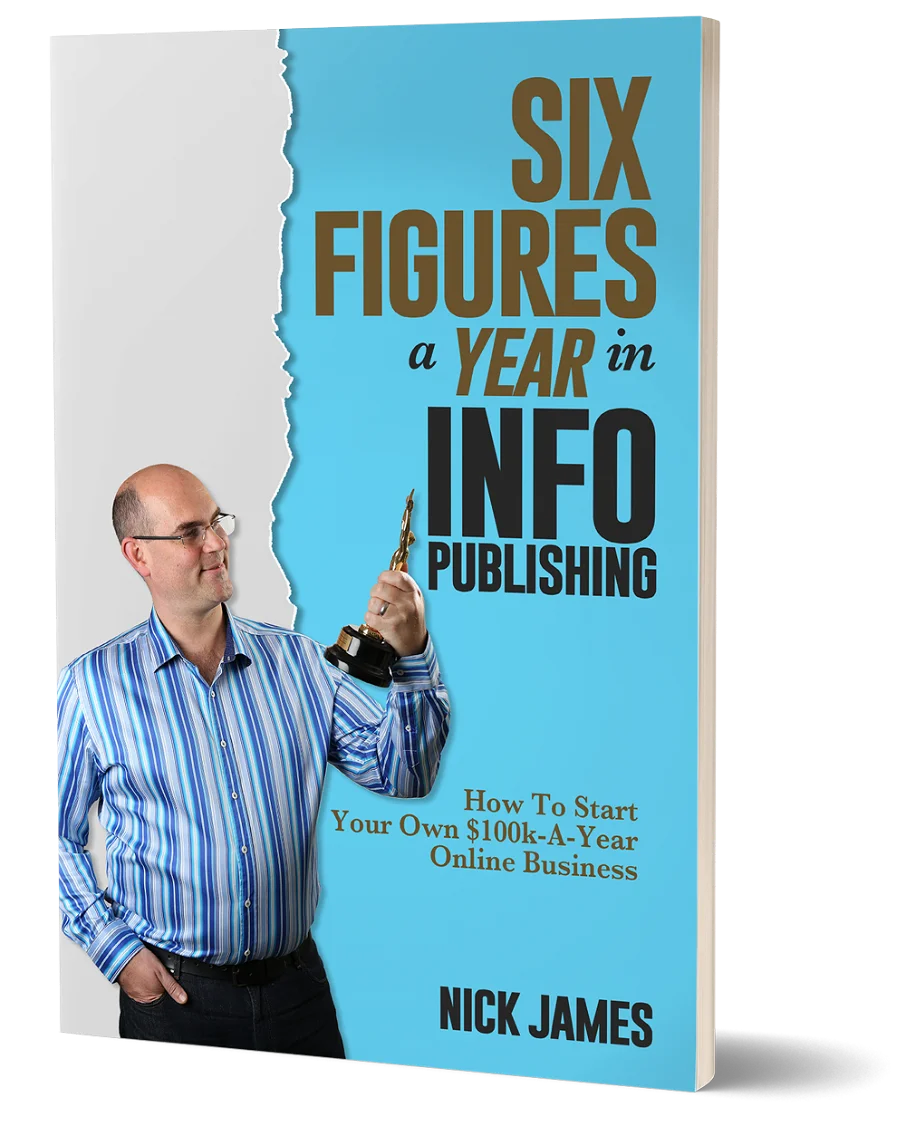
Author offers a FREE copy of this book to his next door neighbor... to prove he's not a drug dealer!
Now claim your FREE COPY.
and follow the step-by-step instructions for making the kind of money (and living the kind of lifestyle) that'll get your neighbors curtains twitching with curiosity!
Enter your details below to discover how to claim your FREE COPY of 'Six Figures A Year In Info Publishing' ...
Privacy Policy : We value your privacy. You can unsubscribe from receiving future emails with 1 click at any time.