
Being Too Polite Online Could Be An Unexpected, Costly Habit
“I can’t sell.” That’s the line so many of us reach for to explain why we hold back online, and it isn’t quite true. What’s happening is quieter than that: we’re so afraid of sounding pushy, of coming across like the scammers we’ve all learned to watch out for, that we end up saying almost nothing clear at all.
We write an email and bury the one thing we’re asking for somewhere in the third paragraph. We build a page and hide the link to our own newsletter behind the words “find out more,” hoping nobody notices we want them to click it.
Being too polite online, in other words, isn’t kindness.
It’s a habit that quietly costs us the very connection we’re trying to build, because a reader who has to work out what you want them to do usually decides it isn’t worth the effort.
There’s a simpler, kinder way through this, and it starts with understanding why clarity, not confidence, is what your reader is waiting for.
The Habit We Mistake For Good Manners
Most of us were raised to believe that asking directly for something is rude, or that it marks you out as one of those people who’s always selling. So we learn to soften everything. We add “if you’d like to” and “no pressure at all” and “only if it feels right for you,” until the actual request has disappeared inside the cushioning.
This feels polite. It feels careful. But your reader doesn’t experience it as thoughtfulness. They experience it as confusion, and confusion, more often than not, just gets closed in favour of something clearer.
There’s a difference between being gentle and being vague, and it’s a difference worth holding onto, because one builds trust and the other quietly erodes it.
What Your Reader Notices First
Think about how you read your own inbox. You scan quickly, and within a few seconds you decide whether a message deserves a second look. You’re not reading for tone. You’re reading to find out what’s being asked of you, and how much effort it will take.
When that’s hard to find, you move on. Not because you didn’t like the person who sent it, but because nobody has time to decode a message that’s trying very hard not to ask for anything.
I’ve found this worth paying attention to in my own writing too, alongside other articles I’ve shared recently on how small habits like this quietly shape whether someone keeps reading or drifts off.
A reader doesn’t need you to be bold. They need you to be legible. Those aren’t the same thing, and mixing them up is where a lot of good intentions go to waste.
This is where being too polite online quietly does the most damage, because the reader never gets to see what you wanted them to do. They only see the hedge around it, and hedges don’t invite anyone anywhere.
A Clear Ask Is Not The Same As A Pushy One
This is the part worth sitting with, because it’s where most of the fear lives. Somewhere along the way, many of us decided that directness and pushiness were the same thing. They’re not.
A pushy message tries to pressure someone into a decision they’re not ready for. A clear message simply tells them, plainly, what the next step is and why it might matter to them.
One respects the reader’s time. The other doesn’t.
Picture two versions of the same message. The pushy one says “act now or you’ll miss out,” pressing a reader who never asked to be pressed.
The clear one says “here’s the link if you’d like to read more,” and stops there. Being too polite online usually means stripping out the second version until nothing is left at all, not avoiding the first.
A reader who has to guess what you want rarely bothers to work it out.
Once you separate those two ideas, the fear of “sounding salesy” tends to loosen its grip a little. You’re not asking anyone to buy anything they don’t want. You’re simply making it easy to say yes to the thing you’re already offering.
The One Step You’re Probably Hiding
Here’s a small exercise. Open the last email you sent, or look at the page you most want people to visit. Find the one thing you want the reader to do. Join your list. Read another post. Reply with a question.
Now ask yourself plainly: could a tired reader, skimming on their phone, find that in under five seconds? If the answer is no, the problem isn’t your offer. It’s that you’ve buried it somewhere beneath all the politeness.
Say your real ask was simply “reply and let me know what you think.” Buried beneath three paragraphs of context and caveats, even an engaged reader might miss it entirely, not because they didn’t care, but because finding it took more effort than replying was worth.
This is especially easy to fall into when you’re worried about seeming too forward, which is exactly the position many of us find ourselves in when we’re building something later in life, with a reputation we care about and no interest in being pushy about it.
The fix isn’t to become someone you’re not. It’s to say the quiet part out loud, once, clearly, and then let the reader decide.
Try This On Your Next Email
Pick one message you’re about to send. Find the sentence where you’re asking for something, even gently. Rewrite it so a stranger could understand exactly what you want in one read.
Instead of “if you’d ever like to see more, feel free to take a look sometime,” try something closer to “here’s where you can read the full version.” Nothing about that is pushy. It’s just plain.
The first version asks for nothing in particular. The second tells the reader exactly where to go and what they’ll find there, and gives them the choice to take it or leave it, which is all a clear ask ever really does.
Do this with one message this week. Notice whether more people respond, click, or reply.
You’re not selling harder. You’re simply removing the extra work you’d been quietly asking your reader to do on your behalf.
Small as it sounds, this single shift tends to matter more than almost anything else you could change about your writing, because it addresses the actual moment where readers decide whether to act or move on.
Being clear isn’t the same as being bold, and it certainly isn’t the same as being pushy. It’s simply the kindest thing you can do for a reader who’s already busy enough.
A Quieter Kind Of Confidence
None of this requires you to change your personality, or start writing in a voice that doesn’t sound like you. It just means trusting that a plain, honest ask is something your reader can handle.
Most people aren’t offended by clarity. They’re relieved by it. And the version of you that says what you mean, gently but plainly, is usually the version your reader trusts the most.
That’s worth remembering the next time you catch yourself softening something into silence.
Kind regards,
Angus
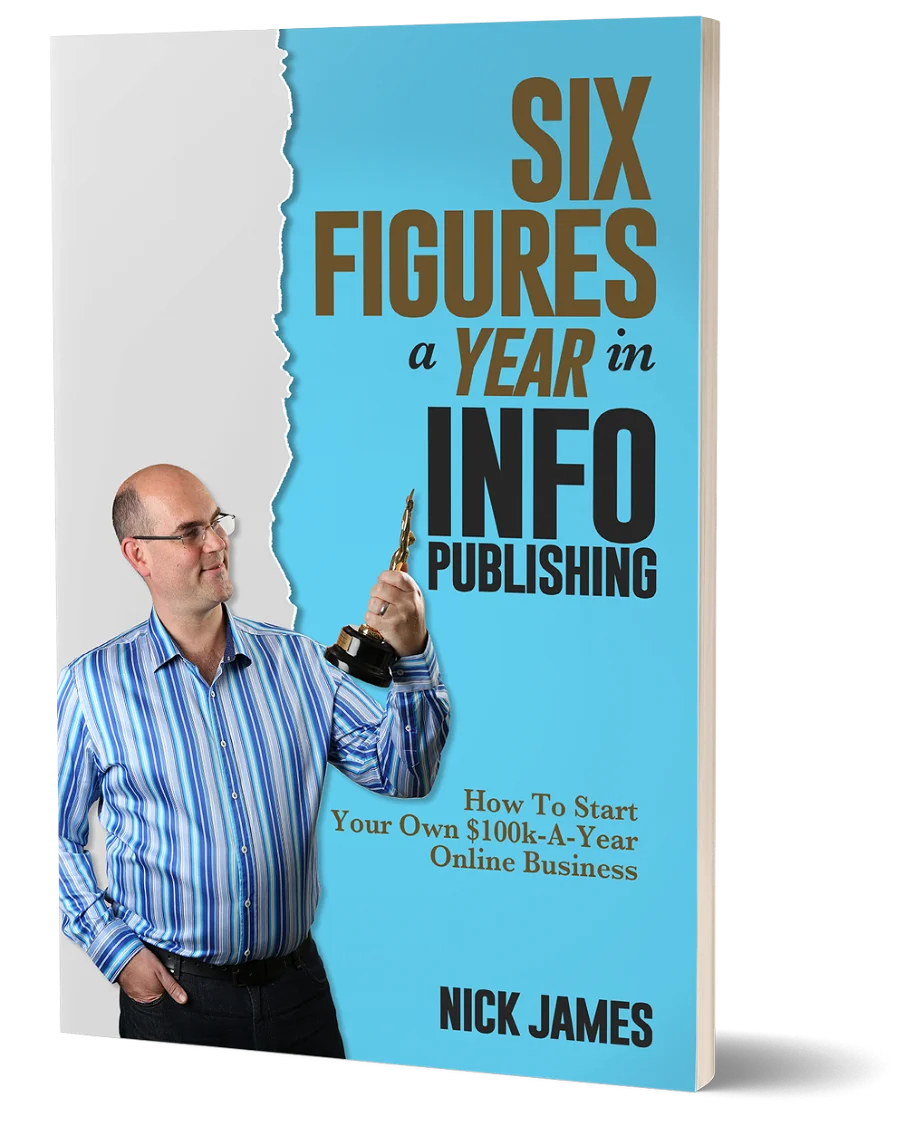
Author offers a FREE copy of this book to his next door neighbor... to prove he's not a drug dealer!
Now claim your FREE COPY.
and follow the step-by-step instructions for making the kind of money (and living the kind of lifestyle) that'll get your neighbors curtains twitching with curiosity!
Enter your details below to discover how to claim your FREE COPY of 'Six Figures A Year In Info Publishing' ...
Privacy Policy : We value your privacy. You can unsubscribe from receiving future emails with 1 click at any time.


