
The Surprising Reason A Clear Message Beats A Clever One
There is a belief that quietly runs through almost every online business site I have ever looked at, including some early versions of my own. It says that to be taken seriously, you have to sound impressive.
A little bit polished, and a little bit mysterious. The sort of writing that makes a visitor think, this person clearly knows something I do not. None of that has much to do with a clear message.
I used to believe that too. It turns out the opposite is true. This matters most of all for someone starting an online income later in life, because you simply do not have years to spend building a reputation the slow way.
The businesses that earn trust quickest are not the cleverest ones. They are the clearest ones, built around a clear message a stranger can grasp in seconds. A visitor who lands on your page and understands, within ten seconds, what you do, who you help and why they should believe you, is far more likely to stay. One who is left admiring your turn of phrase, without knowing what you offer, simply moves on.
I know how that gap feels from the other side of it too. So many of the members I talk to have said, in one form or another, that they do not know much about marketing. They also say they do not have time to learn it properly.
If that is you, this is not another thing to learn. It is something to simplify.
Why Clever Words Quietly Cost You Trust
Read your own homepage as though you had never seen it before. Give yourself ten seconds. Ask yourself what it sells, who it is for, and why anyone should believe it.
If the answer takes longer than ten seconds to find, that is the leak. Not your product. Not your pricing. Just the words standing between a stranger and a decision to stay.
Headlines like helping you reach your potential sound warm, but they say nothing that only you could say. A phrase that could sit on ten different websites is not helping your reader trust you. It is asking them to do the work of working out what you mean, and most people simply will not bother.
Think about the difference between helping you reach your potential and helping retirees replace lost pension income with a simple online business. The first could belong to almost any coach, in almost any industry, aimed at almost anyone. The second could only belong to you, and it tells a stranger in one line whether they should keep reading.
This applies whether a human is reading your page or, increasingly, whether an AI system is trying to work out whether to mention you at all when someone asks it a question. Both need the same thing from you: a business that is impossible to misunderstand.
Build A Clear Message In Four Short Lines
Here is the exercise I would ask you to try this week, and it takes far less time than most marketing tasks that get put off for months.
Write four short lines about your own business, and be honest rather than clever.
We are: the type of business you actually run.
We help: the specific person you are writing for.
We provide: what someone actually receives from you.
We specialise in: the one thing you understand better than most.
Fill those four lines in plainly, without reaching for a word you would not use over a cup of tea with a friend. Then use exactly those words, consistently, across your homepage, your about page, your bio and anywhere else someone meets you for the first time.
A business that is impossible to misunderstand is a business people trust before they have even finished reading.
I keep coming back to that idea, because I have watched what happens once a page stops trying to impress and starts trying to be understood. The visitor relaxes. They stop working out what you mean, and start deciding whether they want what you offer.
Why This Matters More The Later You Start
Younger marketers can sometimes get away with vague, clever positioning. They have time on their side to be discovered slowly, through repetition and trial and error.
Most of us who are building something new in our sixties or seventies do not have quite the same luxury. We need our first sentence to do more of the work. A clear message shortens the distance between someone finding you and someone trusting you.
That distance matters a great deal, especially when you would rather spend your afternoons with the grandchildren. Chasing an audience that never quite understood what you were offering costs more than it seems.
I still run a cheese stall at the local Farmers Markets, and I have noticed the same thing there as I have online. The stalls that do best are rarely the ones with the cleverest sign. They are the ones where a passing stranger reads three words and knows exactly what is on the table, and whether it is for them.
Your online presence works the same way, whether that is a blog, a newsletter, or a simple opt-in page. The clearer your four lines are, the less convincing you have to do afterwards.
Where To Put Your Four Lines Once You Have Them
Once you have your four short lines, use them everywhere a new person might meet you. Your homepage headline. The first paragraph of your about page. Your author bio. The opening line of your next email.
Consistency does more here than cleverness ever could. Every page should feel like it is introducing the same business, not five slightly different ones.
If it helps to see how this plays out further, other articles I have shared recently go into more detail. They cover building an online presence that reads the same way wherever someone finds it.
You do not need AI, automation or a large following to do this exercise. You need twenty honest minutes and a willingness to write plainly rather than impressively.
One Small Step, Not A Rebuild
You do not need to rewrite your entire site this week. Write your four lines, sit with them for a day, then update the one page a stranger is most likely to see first.
That is the whole task. Not a rebrand. Not a redesign. That is a clear message, not a clever one. Just four honest sentences that say plainly who you are, who you help, and why that matters to the person reading them.
Clarity does not shout. It simply refuses to be misunderstood, and that quiet confidence is often exactly what a reader is looking for, whether they realise it or not.
Kind regards
Angus
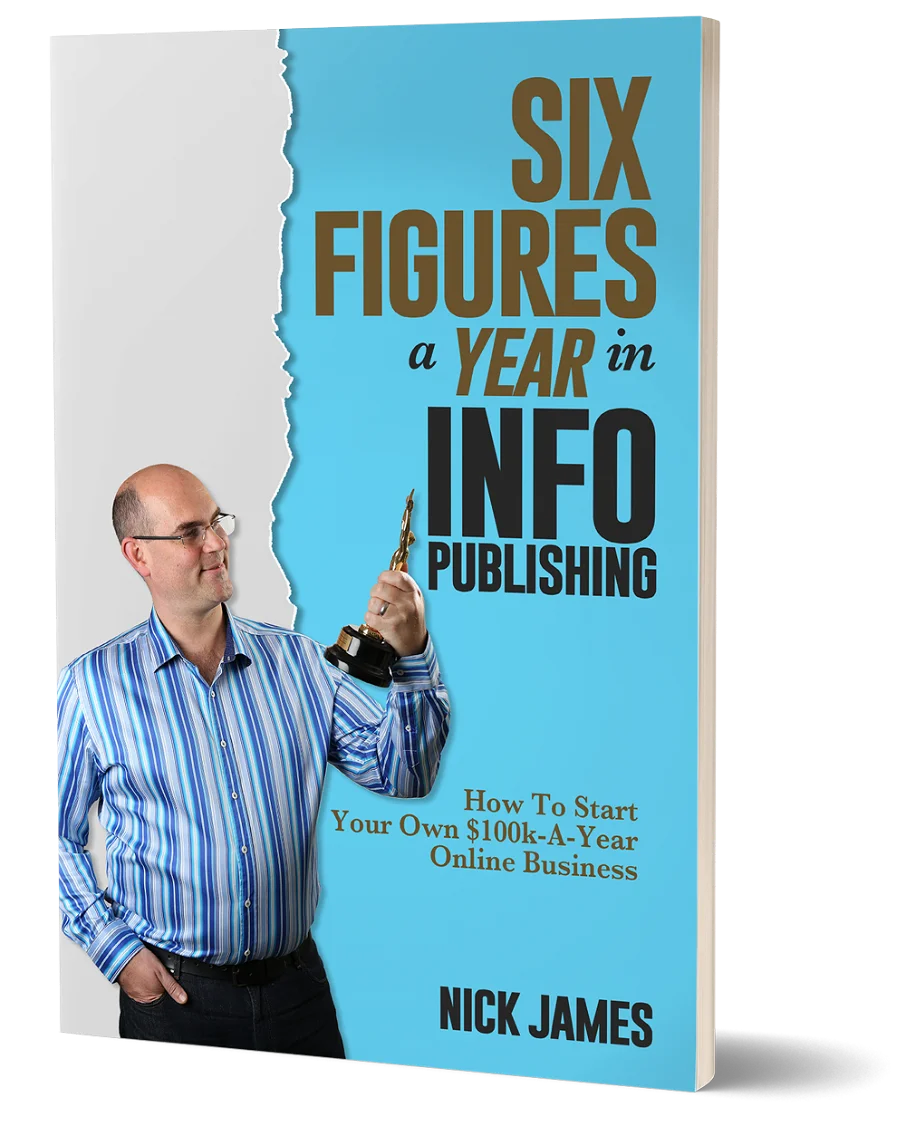
Author offers a FREE copy of this book to his next door neighbor... to prove he's not a drug dealer!
Now claim your FREE COPY.
and follow the step-by-step instructions for making the kind of money (and living the kind of lifestyle) that'll get your neighbors curtains twitching with curiosity!
Enter your details below to discover how to claim your FREE COPY of 'Six Figures A Year In Info Publishing' ...
Privacy Policy : We value your privacy. You can unsubscribe from receiving future emails with 1 click at any time.