
The Smart, Insider Way to Make a Licensed Product Truly Yours
Somewhere out there right now, another person who bought the very same licensed product you did is getting ready to sell it too. They have the same title, the same cover, and quite possibly the same opening paragraph. That is the quiet problem built into almost every licensed product you can buy. The rights that let you sell it let everyone else who bought it sell it as well.
For anyone who has tried an online income system before, only to watch it fade without much to show for the effort, this can feel wearily familiar. This can feel wearily familiar. A licensed product does not have to stay a shared one, though. With a few changes made carefully, and well within the terms of your own licence, it can become something a reader recognises as yours rather than a copy of somebody else’s.
That matters more than it first appears, because residual income rarely comes from blending in. A shared product earns a thin slice spread across every seller who bought it, while a product a reader recognises as yours keeps paying long after the first sale.
Residual income rarely comes from blending in.
Read The Licence Before You Touch A Word
Before changing anything, check what your licence allows. Some resale rights let you adjust the packaging around a product but not the words inside it. A basic resale licence, for example, might let you change the cover and the price, yet say nothing may be altered inside the guide itself. Private label rights usually give you much more room, including the right to edit the content and put your own name on it as author.
If any part of the licence feels unclear, ask the seller to confirm it in writing before you start, and keep that reply somewhere safe. It protects everything you build on top of the licensed product afterwards, which matters far more than it might seem on a quiet first read.
Once you know exactly what you are allowed to touch, the real work can begin. Skipping this step is how sellers end up rebuilding a product twice, once to improve it and once more to undo changes the licence never permitted in the first place.
Give It A Title And A Face Of Its Own
The title and cover are usually the quickest things to change, and often the most overlooked. List the strongest benefits a reader gets from the product, and put one or two of them into a fresh title. Use your own words rather than the vendor’s. A generic guide titled Save Money Fast might become The Five Changes That Freed Up My Own Retirement Budget, built around the clearest benefit inside it.
Swapping just the name on the existing cover is the bare minimum. A new cover with your own colours and your own layout tells a reader this one belongs to somebody in particular. It is not one of a list of sellers who all bought the same bundle.
Picture two sellers holding the identical product: one still uses the vendor’s original stock cover, and the other has recoloured it to match their own site. A reader trusts the second without quite knowing why.
I have touched on building a simple, recognisable identity online in other articles I have shared recently, and a licensed product benefits from exactly the same thinking. A reader should be able to tell who stands behind it before they read a single line.
Get the title and the cover right, and you have already pulled ahead of most other sellers of the same product.
Speak To One Person Instead Of Everyone
Most licensed products are written for a broad audience, which is exactly where you can pull further ahead. Most sellers stop at the cover and never narrow the audience further, which is exactly why so many identical copies remain on the market. Narrow the product toward one group you understand, and the examples inside it start to ring true in a way a generic version never will.
Think about a general guide on saving money, rewritten with retirement in mind rather than young families. The worry is no longer the school run or packed lunches.
It is a pension that no longer keeps pace with the cost of living. It is also a wish to leave a legacy for the grandchildren, rather than simply get by.
Change the examples, and the same guide speaks directly to a reader who has been waiting for somebody to understand their actual situation. That is worth far more to them than another polished list of tips.
Rewrite The First Page And The Last
Readers remember what they read first and what they read last. Most licensed products open flatly, with a dull summary of what is inside rather than a reason to keep reading.
Open instead by naming the one thing your reader stands to gain, without giving away exactly how they will get it. A guide on saving for retirement might open by naming the single habit that freed up the most money for one reader, rather than listing every chapter inside. That small shift in the opening page is often enough to turn a skim into a proper read.
The closing page matters just as much. A flat ending wastes the exact moment a reader feels most pleased with what they have just learned. Point them clearly toward whatever you want them to do next.
Add The One Thing Nobody Else Can Copy
Nick James, who built the original training this idea comes from, puts it simply. Your own tips and your own view on a point are part of it.
So is the odd honest opinion only you would hold, since that finally makes a shared product feel like your own. Nobody else holds a licence to your experience.
You do not need a dramatic story to do this. A single honest opinion on a part of the guide you would do differently is often enough. Tie it to something you have watched work in your own small corner of this business. You might say plainly that one chapter’s advice never worked for you, and explain the different approach you use instead.
It gives a reader one more reason to trust the person who sent them the link. Otherwise they are left wondering which of several identical sellers they happened to land on, and that doubt is often enough to send them looking for the cheapest version instead.
Where This Leads
Customising what you have is a fine place to start, but it is only one part of a bigger picture. Nick James goes much further into it in Product Licensing Formula. It walks through picking a market, choosing a product worth customising, building simple advertising around it, and bringing buyers back for more.
If the idea of turning a ready-made product into something truly your own appeals to you, it is worth a look. That is especially true if you would rather follow a structured path than work it out alone.
Nobody is suggesting it is the only route to a steadier income in retirement. But for anyone who would rather build on solid ground than start from a blank page, it is a sensible next place to spend some time, especially once the basics of customising a licensed product start to feel familiar.
Whatever you choose to customise first, remember the changes do not need to be large to matter. A clearer title, one example that fits your reader, and a single honest opinion of your own are all small changes. Yet each one moves a shared product a little further from the crowd and a little closer to being truly yours.
Kind regards,
Angus
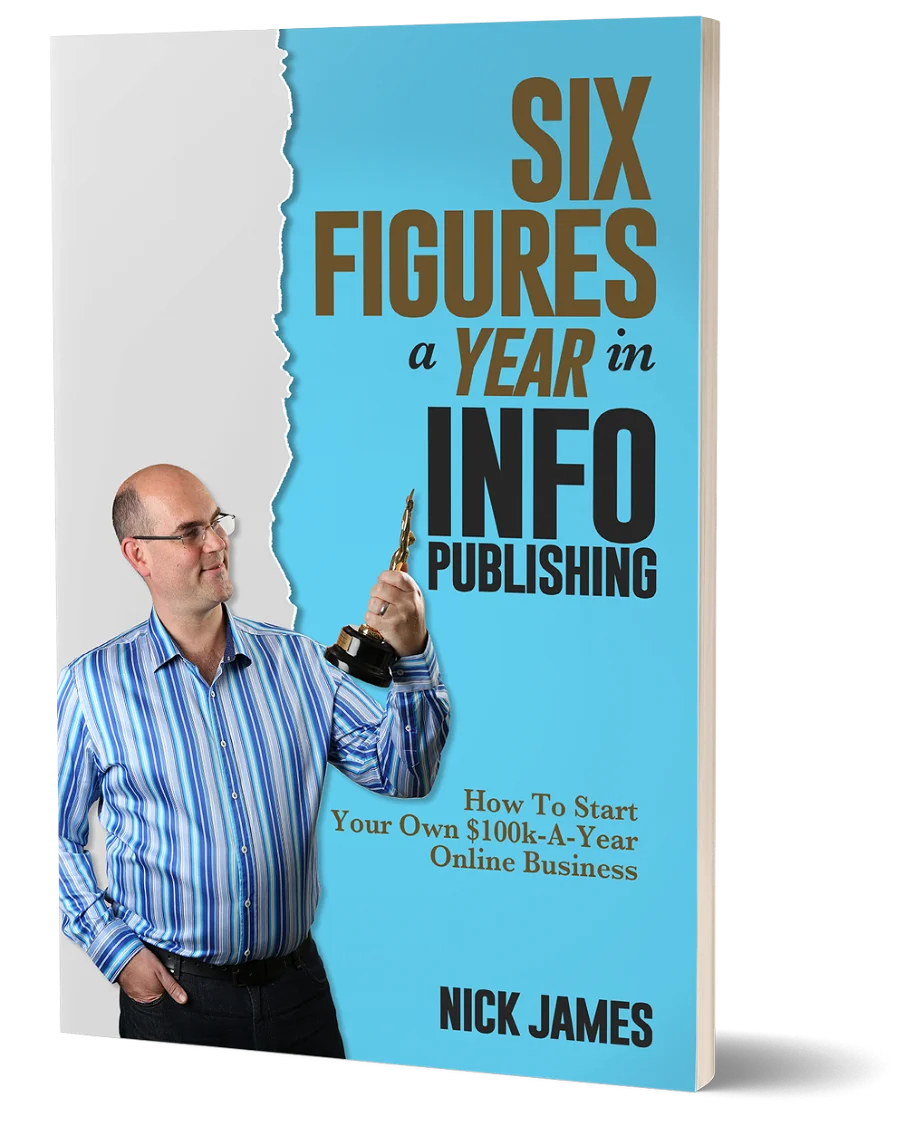
Author offers a FREE copy of this book to his next door neighbor... to prove he's not a drug dealer!
Now claim your FREE COPY.
and follow the step-by-step instructions for making the kind of money (and living the kind of lifestyle) that'll get your neighbors curtains twitching with curiosity!
Enter your details below to discover how to claim your FREE COPY of 'Six Figures A Year In Info Publishing' ...
Privacy Policy : We value your privacy. You can unsubscribe from receiving future emails with 1 click at any time.