
What’s the Surprising Way to Know What Readers Really Want?
You have sat down to write another article for your readers, and the blank page is staring back at you more stubbornly than it did last week.
Perhaps you asked an AI tool for twenty five topic ideas, only to watch every single one come back so general it could belong to any site, in any niche, written by anyone at all. Perhaps you scrolled through old newsletters hoping something would spark a thought, and nothing quite did.
Here is the part that rarely gets said plainly. You do not need more ideas pulled from thin air. You need to know what readers really want, and the honest answer to that is usually sitting somewhere you have simply not looked yet.
If you do not know much about marketing, and do not have the time to learn another system from scratch, this is good news rather than one more thing to master.
Why Guessing Rarely Works
Asking an AI tool “give me content ideas” produces exactly what you would expect. Averages. A list built from thousands of other articles that already exist, stitched into something plausible rather than useful.
The ideas are not wrong, exactly. They are simply not yours, because they were never built from a real question a real person asked.
Picture two people writing on the same subject. One has typed a generic prompt into an AI tool and been handed a tidy list of article titles that any site could publish. The other has just finished reading through a page of messy, half-finished questions left by actual readers, each one revealing a specific confusion or worry nobody else is addressing in quite that way. The second writer already knows what readers really want before they have typed a single word, and that difference shows up in every sentence that follows.
There is a quieter approach that works better, and it starts by putting the question-finding before the writing, rather than the other way round.
You do not need more ideas pulled from thin air. You need to know what readers really want, and the answer is usually sitting somewhere you have simply not looked yet.
What the Cheese Stall Taught Me About Listening
I took early retirement at 55 with a final salary pension, and started running a cheese stall at local Farmers Markets. I still run it now, at 71, though less often than I used to.
Every week, much the same as it is for anyone building an online audience, I stand behind that stall and hear the same handful of questions come round again. Which cheese pairs with a particular wine. Whether something will keep until the weekend. Why one price is higher than another.
I used to think I needed to decide in advance what my customers wanted explaining. It took me longer than it should have to notice that they were already telling me, out loud, every single week, if I simply paid attention rather than assumed.
That habit of listening rather than guessing turned out to matter just as much once I started writing online as it ever did behind a trestle table. The questions readers ask in comments, in replies, in the quiet corners of a forum, are doing exactly the same job those market stall questions did for me. They are telling you what to make next, without you needing to invent it.
Where the Real Questions Are Already Waiting
If your audience is anything like mine, people thinking seriously about an income for the years around and after retirement, the real questions are not hard to find once you know where to look.
Facebook groups built around retirement planning or starting something new later in life are full of them. So are the comment sections under YouTube videos about building an online income without being especially technical. So are the reviews left on books and courses covering similar ground, where people say plainly what the material missed.
Your own site holds some of the best material of all. Every comment, every reply to a newsletter, every question someone has sent you directly is evidence of what readers really want, recorded in their own words rather than yours.
I have written about building this kind of habit in other articles I have shared recently, and it keeps coming back to the same point. A single comment can hold a year of material, if you are willing to notice it.
Turning One Question Into a Finished Article
Once you have a genuine question in front of you, the article almost writes itself, because you are no longer guessing at the shape it should take.
Write the question down exactly as it was asked, roughness and all. Answer it plainly, in the kind of language you would use explaining it to someone across a kitchen table.
Add one concrete example, drawn from something you have actually seen or tried. Then close by pointing toward where someone could go to learn the fuller picture, if the one answer was not the end of their need.
That last part matters more than it sounds. A useful article answers one thing properly. It does not pretend to answer everything, and readers can tell the difference.
Say a reader has asked, in a slightly roundabout way, whether it is too late to start an online income in their seventies. Write that question down as closely as you can to how it was actually asked. Then answer it plainly, the way you might over a cup of tea, before adding one real example of someone who started later than they expected and still made progress. That one small sequence, question, plain answer, real example, does more for a reader than a dozen generic tips ever could.
Make It a Weekly Habit, Not a One-Off
Set aside twenty minutes once a week. Read through comments, group discussions and anything readers have sent you directly. Keep a simple running list of the questions that repeat.
Over a few months, patterns start to show themselves. The same worry, dressed in slightly different words, turns up again and again. That repeated worry is nearly always worth an article of its own.
This is a small habit, not a system you need to study for weeks before starting. It costs twenty minutes, and it replaces guesswork with evidence every time you sit down to write.
Imagine sitting down on a Sunday evening with nothing more than a notebook and twenty minutes. You scroll back through the week’s comments and notice three different people asking some version of the same thing, worried about whether their pension will stretch far enough to try something new. That pattern, repeated three times in one week, tells you precisely what readers really want far better than any generic list ever could.
Where to Go From Here
Finding the right question is only half the work. What you do with the words once you have it, how you explain, how you phrase the benefit, how you build the sentence that makes someone want to keep reading, is its own skill.
Nick James put together a resource called One Letter From Retirement that looks closely at exactly that, the small, specific choices in wording that decide whether a piece of writing earns trust or gets scrolled past. It is built around proven headline types and a worked process for shaping an answer once you already know the question, which is precisely the stage this article leaves you at.
If you want to go further with the writing side of this, once you have started collecting real questions of your own, that is a reasonable next step to look at.
Start With the Question, Not the Blank Page
You do not need another AI prompt to tell you what to write next week. You need to notice what your readers are already asking you, somewhere you have perhaps stopped checking.
Start small. One question, answered properly, beats twenty generic ideas that could have come from anyone.
Kind regards,
Angus Fraser
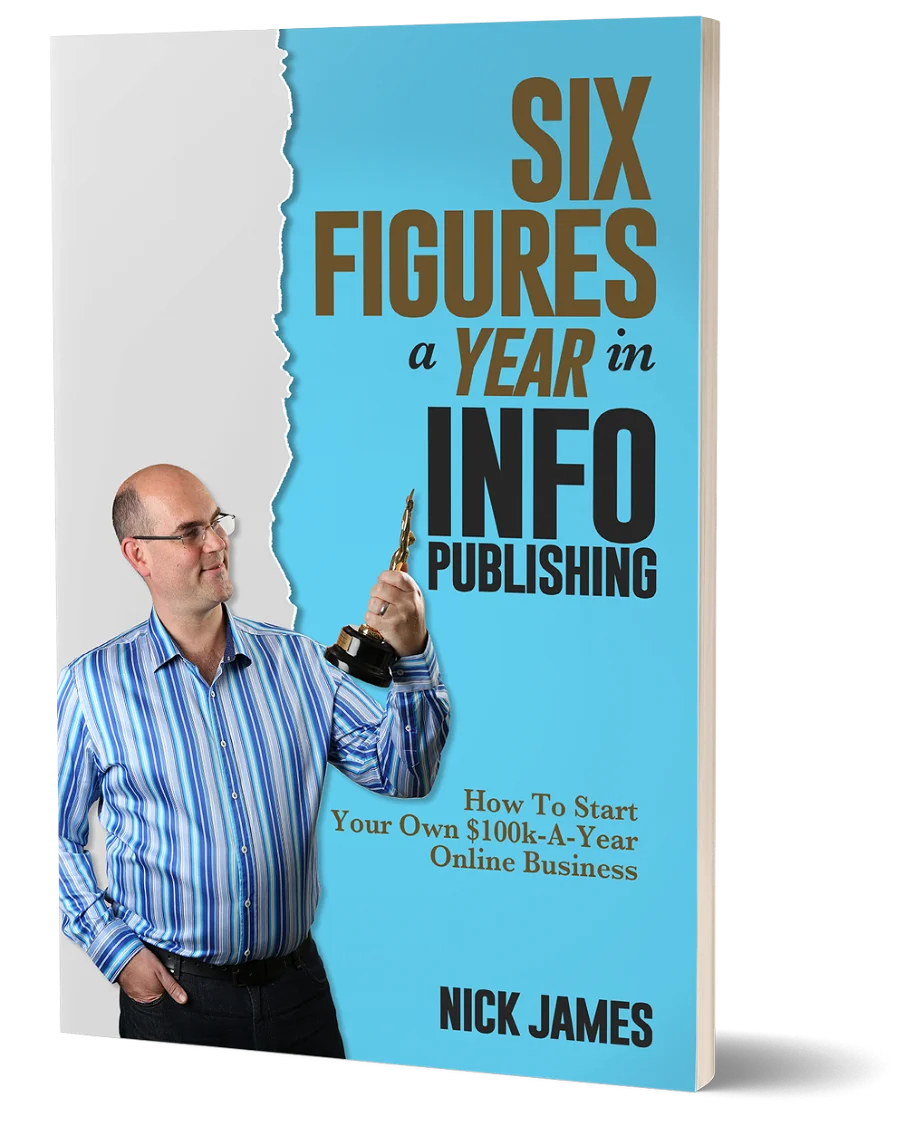
Author offers a FREE copy of this book to his next door neighbor... to prove he's not a drug dealer!
Now claim your FREE COPY.
and follow the step-by-step instructions for making the kind of money (and living the kind of lifestyle) that'll get your neighbors curtains twitching with curiosity!
Enter your details below to discover how to claim your FREE COPY of 'Six Figures A Year In Info Publishing' ...
Privacy Policy : We value your privacy. You can unsubscribe from receiving future emails with 1 click at any time.


